NHL Preseason Sept 2026: Test IPTV Free Trial Before Regular Season
September 9, 2026 · 8 min read
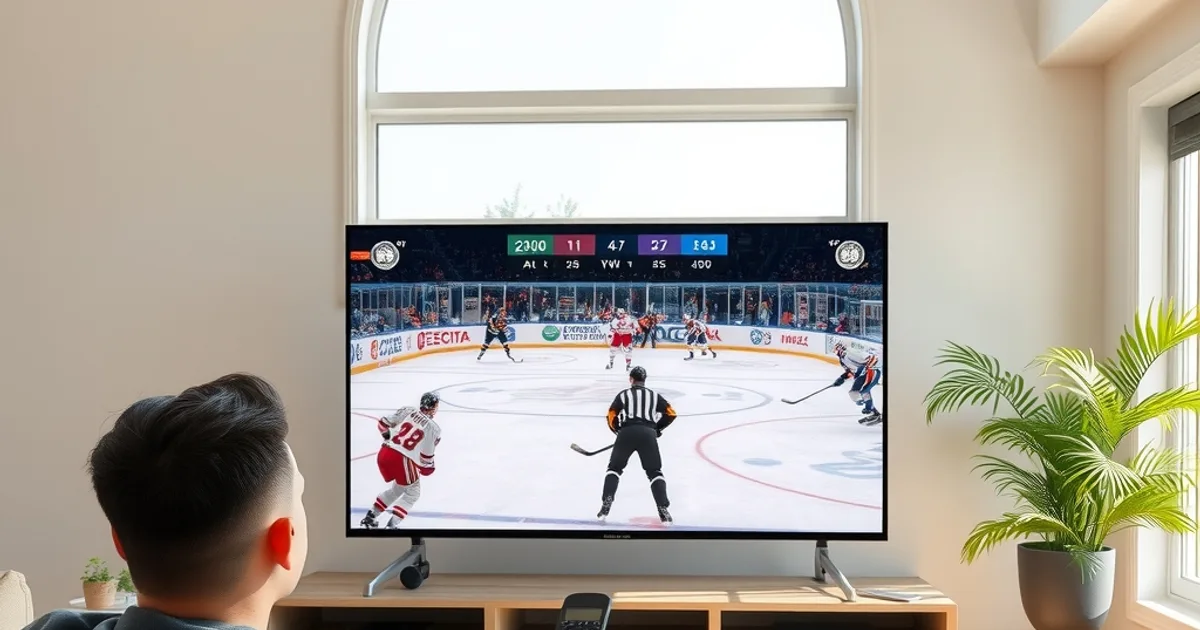
NHL preseason 2026-27 starts September 19, 2026 — this week. Canadians are already planning their fall viewing setup, and that makes right now peak intent for free trial signups: nobody wants to commit to a subscription for a full 84-game regular season without knowing the stream will hold up on a Saturday night with three games running at once.
That's the real value of preseason: it's the hardest test hockey can throw at a streaming service, packed into a single eight-day window before the games start counting. The NHL confirmed a 65-game preseason slate across 36 NHL and neutral-site venues, running from September 19 through September 26, 2026, ahead of the regular season opening September 29 — the first season with 84 games per club since the schedule last expanded decades ago. If your IPTV service can survive this week without buffering, it can survive the season.
This guide gives you a day-by-day plan for using a 24-hour or 48-hour free trial during that window: what to test, when the risk of buffering is highest, and how to tell whether a stuttering stream is your internet or your provider before you hand over a card number.
Why Preseason Is the Ultimate IPTV Free Trial Test
Most people test a free trial on a quiet weeknight with one show playing on one screen. That tells you almost nothing about how the service behaves under real load. Live sports is different: everyone watching wants the same feed at the same second, and any weakness in a provider's server capacity, CDN routing, or your own ISP's peering shows up immediately as a frozen frame or a pixelated block right when the puck drops.
Preseason concentrates that pressure into one short window instead of spreading it across a five-month season. You get compressed, back-to-back exposure to exactly the conditions that matter: evening kickoffs, doubleheaders, and the kind of sustained two-to-three-hour live load that a VOD library never generates. A trial that only ever streamed a movie hasn't been tested — a trial that survived a Saturday doubleheader has.
It's also the cheapest possible test. Preseason carries none of the stakes of a playoff game, so if the stream drops, you've lost nothing but learned everything. Use that low-stakes window to find the failure points before the regular season, and before the postseason, actually matter.
Curious whether your setup can handle a preseason doubleheader?
NHL Preseason 2026-27 Schedule: Sept 19-26
The league's 2026-27 preseason runs eight days, September 19 through September 26, 2026, with 65 games spread across 36 NHL and neutral-site venues. Each club plays a maximum of four preseason games this year — fewer than in past seasons — because the calendar had to make room for the new 84-game regular-season format that starts September 29.
That shorter preseason actually works in your favor as a tester: fewer total games means the ones that are scheduled are more likely to cluster into busy blocks, which is exactly the stress scenario you want. Check your team's specific game dates and times directly on the NHL's official schedule or your IPTV app's own guide once you're inside the trial — exact broadcast assignments can shift close to game day, so treat the listing inside your app as the source of truth rather than anything published weeks in advance.
Plan your trial window around the busiest days on the calendar rather than the first day you happen to be free. A midweek single game tells you the stream works; a weekend slate with multiple simultaneous matchups tells you whether it scales.
Your 24-Hour vs. 48-Hour Trial Window: Which Games to Prioritize
If your trial only lasts 24 hours, spend it on the single busiest day you can find in the Sept 19-26 window — ideally a Saturday with multiple games overlapping in prime time. That compresses your entire test into one high-load evening: start the first game in standard definition to confirm the connection is stable, switch to 4K partway through, and see whether the stream renegotiates cleanly or stutters through the change.
A 48-hour trial gives you room to do something a single day can't: compare a quiet weeknight game against a loaded weekend slate back to back. Watch a lower-demand weeknight matchup first to establish your baseline picture quality and load time, then hit a doubleheader night second. If the second night looks noticeably worse than the first, that's a capacity problem, not a fluke.
Either way, don't burn the whole trial on one broadcast. Split your available hours across at least two different games on two different nights so you're testing consistency, not a single lucky (or unlucky) stream. For a side-by-side on which app makes this kind of multi-day comparison easiest to run, see /iptv-app-comparison-canada-smarters-tivimate.
What to Test: 4K Quality, Buffer Stability, Multi-View
Start every session in the highest resolution the app offers and let it run for at least ten minutes before judging anything — many streams look fine for the first minute and then degrade once the buffer settles into steady-state. Watch specifically for macroblocking (blocky squares during fast motion, common on a breakaway or a scramble in front of the net) and for audio that drifts out of sync with the video, which is an early warning sign of a struggling connection.
Buffer stability matters more than peak resolution. A stream that holds a slightly lower bitrate without ever pausing is more watchable than one that starts in 4K and stutters every few minutes. Note how many times the video actually stops to rebuffer during a full period, not just whether it looked sharp in a single screenshot moment.
If the app supports multi-view or picture-in-picture, test it deliberately during a doubleheader night — running two games at once is a legitimate real-world use case for hockey fans and a much harder load than a single stream. For a dedicated walkthrough on judging sports-specific quality across hockey and CFL broadcasts, see /test-iptv-free-trial-sports-quality-cfl-hockey.
Peak Hours for Preseason Streaming: When Buffering Risk Is Highest
Most preseason games start between 7 PM and 7:30 PM local time, and that's exactly when residential internet demand across a neighborhood or ISP network peaks — everyone else is streaming, gaming, or video-calling at the same hour. The risk window runs roughly 7 PM to 11 PM ET, covering both the live broadcast and the immediate post-game highlights crowd still online.
Deliberately test at both ends of that window. Start a game right at first puck drop when load is climbing, and separately check a stream started closer to 10 or 11 PM when overtime or a late West Coast start might still be live. If quality holds steady across that whole stretch rather than degrading as the evening wears on, that's a strong signal the provider's infrastructure — not just your home connection — is handling peak demand properly.
Compare what you see during those peak hours against an off-peak afternoon rerun or on-demand clip in the same app. A meaningful quality gap between the two tells you the bottleneck is concentrated at exactly the hours you'll actually want to watch.
ISP Throttling During Live Hockey: Provider or Internet?
When a stream degrades specifically during peak hours, the instinct is to blame the IPTV provider — but the cause is just as often your own ISP applying traffic shaping to video streams during high-demand periods. Telling the two apart requires isolating variables rather than guessing.
Run a wired speed test right before and right after a buffering episode, then compare that number against your plan's advertised speed. If your measured speed collapses specifically during the live game but recovers minutes later once the broadcast ends, that pattern points at throttling on your connection rather than a weak stream from the provider. A VPN can sometimes route around ISP-level shaping, which is itself a useful diagnostic: if quality improves with a VPN active, the ISP was the bottleneck.
For the full step-by-step method — including which specific tests to run and in what order — see /detect-isp-throttling-iptv-free-trial-canada-peak-hours. Doing this diagnostic during your free trial, while there's no money on the line, is far better than discovering the pattern after you've already paid for a month.
Supported Devices for Preseason Streaming: Test Each One
A trial that only gets tested on one device misses the point — most households actually watch hockey across several screens depending on who's home and where. Before the trial expires, load the app on every device you'd realistically use during the season: a Firestick or similar streaming box on the main TV, a smart TV's built-in app if available, a phone for checking in on the score from another room, and a laptop or tablet for anyone who prefers watching at a desk.
Pay attention to app responsiveness, not just picture quality, on each device — a channel guide that takes several seconds to load or a remote that lags behind button presses is a real annoyance during a live game with fast line changes. Older streaming boxes in particular can struggle with 4K decoding even when the connection itself is fine, so a device-level failure can look like a stream problem when it isn't.
For a direct comparison of how the same trial performs across Firestick, Roku, and Apple TV specifically, see /iptv-free-trial-device-comparison-firestick-roku-appletv. If you haven't started a trial yet, /how-to-get-iptv-free-trial-canada-no-credit-card covers how to sign up without handing over payment details first.
Preseason ends September 26 — lock in your plan before the 84-game season opens.
Confident Decision: When to Upgrade for Regular Season
By the time preseason wraps on September 26, you should have watched at least one quiet weeknight game and one loaded weekend doubleheader, tested 4K alongside a lower resolution, checked peak-hour stability between 7 PM and 11 PM, and confirmed on your own devices that the app is responsive and not just watchable. That's a genuinely informed decision — not a guess based on one lucky stream.
If everything held up cleanly across that range of conditions, you're in a strong position to commit before the regular season opens September 29 and the games start counting. If something didn't hold up — repeated buffering during peak hours, a device that couldn't handle 4K, or a throttling pattern you traced back to your own ISP rather than the provider — you now know exactly what to fix or what to avoid, instead of finding out three weeks into the season.
Frequently asked questions
When does the NHL 2026-27 preseason start?
NHL preseason 2026-27 runs September 19 through September 26, 2026, with 65 games across 36 NHL and neutral-site venues, ahead of the regular season opening September 29, 2026.
Why is preseason a better free trial test than a regular weeknight?
Live sports creates sustained, simultaneous demand that a single show or movie never does. Preseason concentrates that load into one short window, so it exposes buffering, resolution, and capacity issues you'd otherwise only discover partway through the paid season.
Should I use a 24-hour or 48-hour trial for preseason testing?
A 24-hour trial should focus on the single busiest game day you can find. A 48-hour trial lets you compare a quiet weeknight game against a loaded weekend doubleheader, which reveals whether quality holds steady under heavier load.
How do I know if buffering during a hockey game is my ISP or the IPTV provider?
Run a wired speed test right before and after a buffering episode and compare it to your plan's advertised speed. If your speed specifically drops during the live broadcast and recovers afterward, that pattern points to ISP throttling rather than a provider-side problem.
What should I test besides picture quality during the trial?
Test buffer stability over a full period rather than a single moment, try multi-view if you plan to watch simultaneous games, and check app responsiveness — guide load time and remote lag — on every device you'll actually use during the season.
Does the new 84-game NHL schedule change anything for streaming?
It means a longer, more demanding season overall, which makes preseason testing more valuable, not less — you want confidence in stream quality before committing to a service you'll rely on for significantly more live games than in past seasons.